Ramayana · Episode 3: Childhood and Education
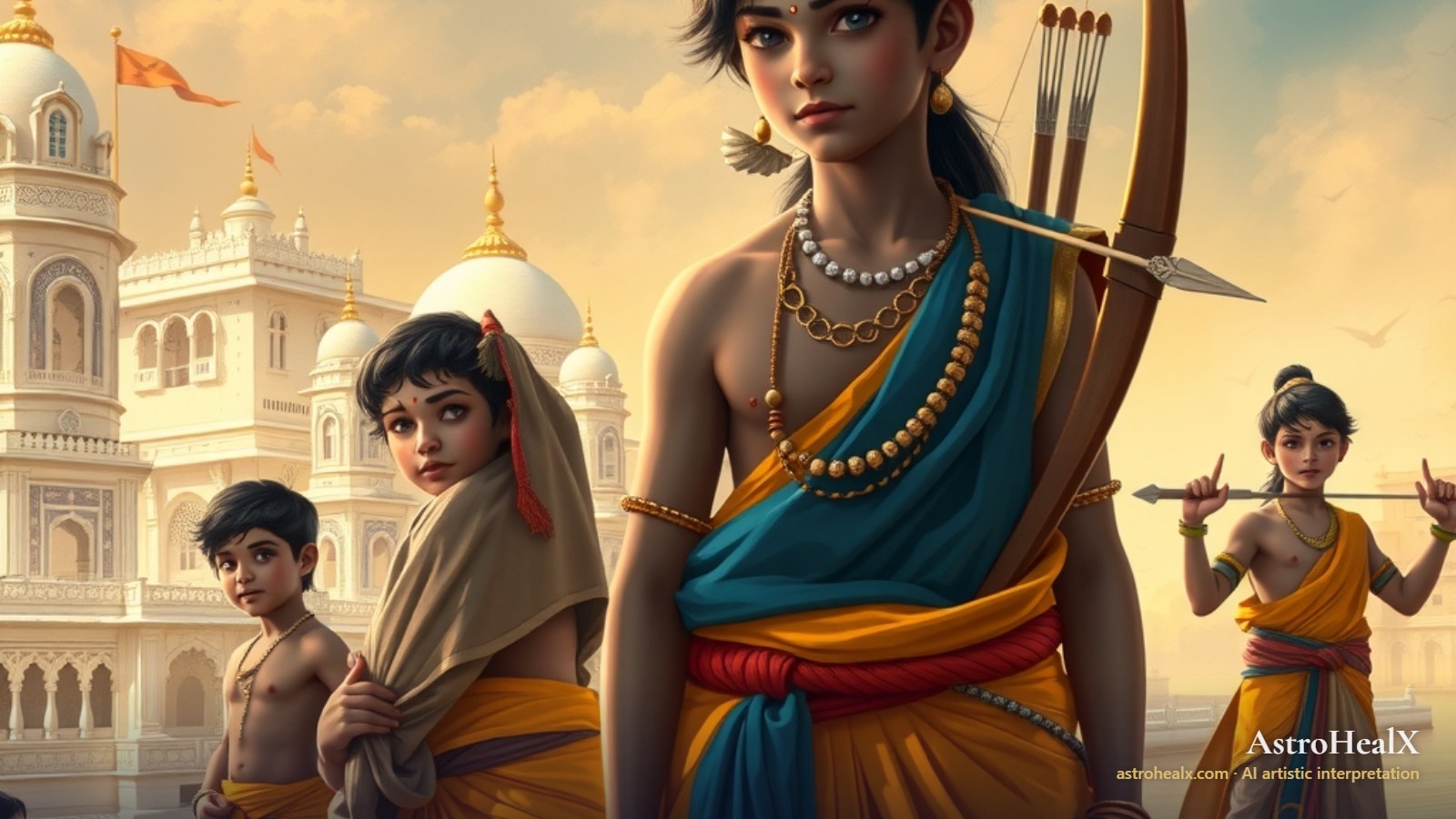
Four brothers, two pairs, one teacher — and a father who cannot look away from his eldest. · 7 min · 4 scenes
Scene 1
Under Vasishtha the four princes learn the Vedas, archery, the handling of elephants and horses, statecraft and music. Valmiki says little of their boyhood — a few verses — but notes the pairing that will shape everything: Lakshmana is Rama's "outer life-breath", never eating before him, never sleeping until he sleeps; Shatrughna is the same to Bharata.
Scene 2
Of Rama the poet gives a list rather than anecdotes: he speaks first and gently to everyone, remembers a kindness and forgets a wrong, visits the old and the learned, never boasts, and is "dearer to the people than their own breath". Dasharatha, grown old, watches him "as the sun watches the lotus" and begins to think of the succession.
Scene 3
Later tellings fill the silence Valmiki left. The Ramcharitmanas gives the child Rama demanding the moon, mothers chasing four muddy boys, and Kausalya seeing the universe in her baby's mouth; the Adhyatma Ramayana makes the brothers conscious incarnations from the start. These are the stories most Indians grow up with — and they belong to the tradition, if not to the oldest text.
Scene 4
One day the gatekeeper announces a visitor no king refuses: Vishwamitra — once a king himself, who by ferocious penance forced the gods to make him a brahmarshi. Dasharatha welcomes him with the words a host must say — "ask, and it is yours" — before he knows what will be asked.
What happened
The princes are educated by Vasishtha; Rama's character is drawn in a list of virtues; Vishwamitra arrives with a request.
Why it matters
The epic defines goodness by habits anyone can copy — speaking first, remembering kindness, forgetting injury — before it shows Rama lifting a bow.
What happens next
Vishwamitra asks for the sixteen-year-old Rama to fight demons, and Dasharatha nearly breaks his word.
Dasharatha promised before hearing the request. Is a promise made blind still binding?
हिंदी में — बाल्यकाल और शिक्षा
वसिष्ठ के पास चारों राजकुमार वेद, धनुर्विद्या, गज-अश्व संचालन, राजनीति और संगीत सीखते हैं। वाल्मीकि बाल्यकाल पर कम कहते हैं — कुछ श्लोक — पर वह जोड़ी बताते हैं जो सब कुछ तय करेगी: लक्ष्मण राम के "बाहरी प्राण" हैं, उनसे पहले न खाते, उनके सोने तक न सोते; शत्रुघ्न भरत के लिए वही हैं।
राम के बारे में कवि प्रसंग नहीं, गुणों की सूची देते हैं: सबसे पहले और मधुर बोलते हैं, उपकार याद रखते और अपकार भूल जाते हैं, वृद्धों और विद्वानों के पास जाते हैं, कभी आत्मप्रशंसा नहीं, और "प्रजा को अपने प्राणों से प्रिय"। वृद्ध होते दशरथ उन्हें "सूर्य कमल को जैसे" देखते हैं और उत्तराधिकार सोचने लगते हैं।
वसिष्ठ राजकुमारों को शिक्षा देते हैं; राम का चरित्र गुणों की सूची में; विश्वामित्र एक माँग लेकर आते हैं।
Sources: Valmiki Ramayana, Bala Kanda, sargas 18–19. Modern retelling, not translation; "variant" marks regional or later additions. Images are AI artistic interpretations.
‹ Episode 2: Birth of Lord Rama · Episode 4: Vishwamitra and the Protection of the Yajna ›
This page is the readable version. The interactive view has the full reader, search and related tools.
Open in AstroHealX