Ramayana · Episode 7: The Events Leading to Exile
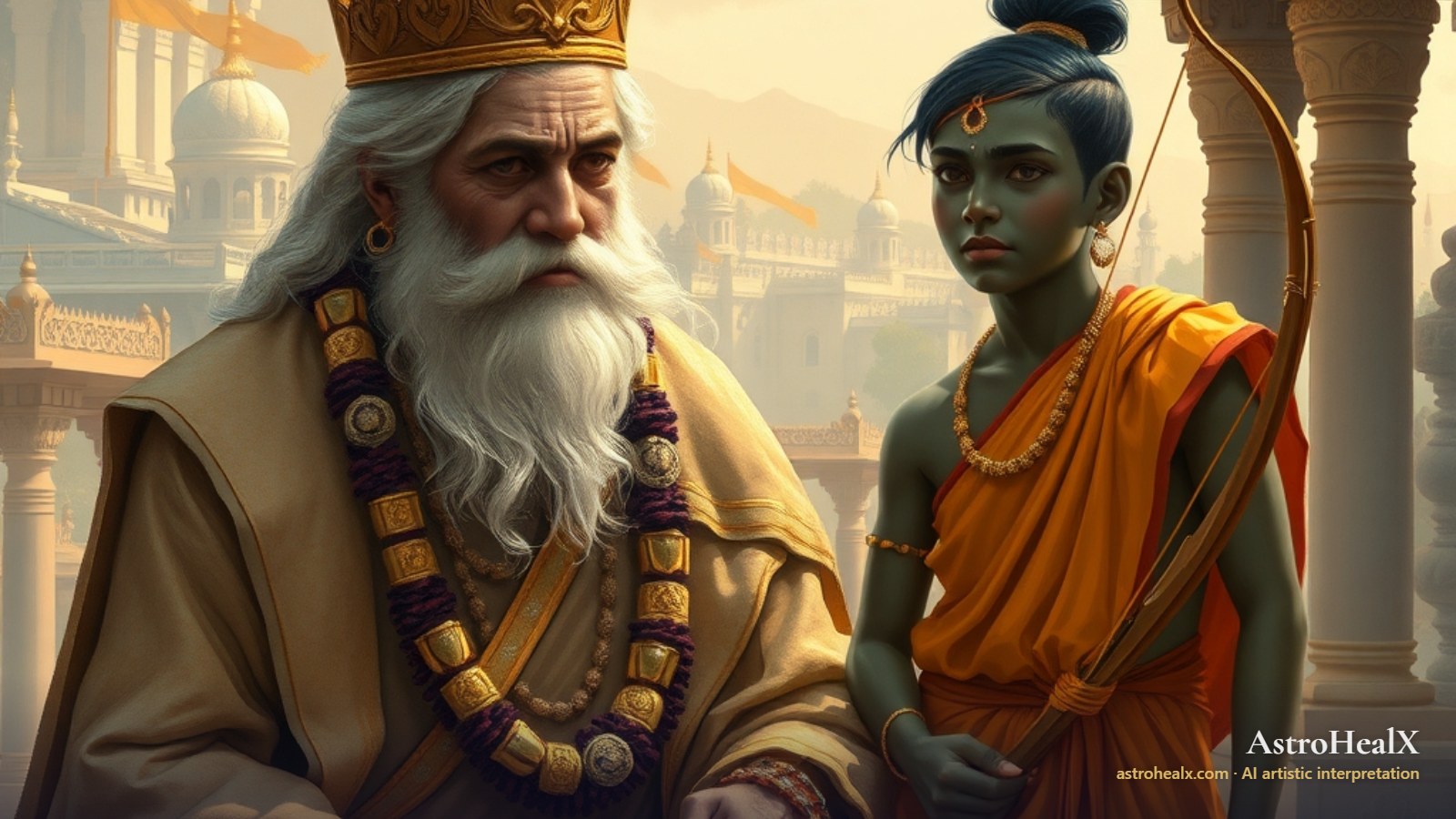
The city is decorated for a coronation. By dawn the garlands will be for a funeral of hope. · 11 min · 6 scenes
Scene 1
Dasharatha sees omens — a comet, his own ageing face — and calls the assembly: let Rama be made Yuvaraja tomorrow, while Bharata is away in Kekaya, under the Pushya star. The people roar assent. Alone with Rama he admits the haste: "Men's minds are fickle; tonight you and Sita should fast and sleep on kusha grass." Ayodhya hangs flags from every house; the streets smell of incense until midnight.
Scene 2
From the roof, Manthara — Kaikeyi's maid, who came with her from Kekaya, bent since birth — sees the city in festival and learns why. She runs to the queen. Kaikeyi, delighted, gives her a jewel for the news. Manthara throws it down. "Fool. Kausalya will be the king's mother; you will be her servant, and Bharata will be Rama's." Kaikeyi protests that Rama is dearer to her than Bharata. Through the night Manthara works, and by dawn the love has been turned to fear.
Scene 3
The weapon is old: years ago, in the war of the gods against Shambara, Kaikeyi drove the king's chariot and saved his life when a wheel-pin broke; he granted her two boons, and she said she would ask later. Ask now, says Manthara: Bharata crowned, and Rama banished to the forest for fourteen years — long enough for the people to forget him. Kaikeyi enters the Chamber of Anger, strips off her ornaments, and lies on the bare floor.
Scene 4
Dasharatha comes at night to share his joy and finds her on the floor. He swears by Rama himself that he will grant whatever she asks. She names the two boons. The old king falls "like a tree cut at the root". He begs, offers his kingdom, calls her a snake he has nursed, weeps through the whole night; she does not move. Bound by his word — and the poem insists that a king's word is the ground the world stands on — he cannot say no, and cannot say yes.
Scene 5
At dawn Rama, bathed and ready, is summoned to Kaikeyi's apartments and finds his father unable to speak. Kaikeyi speaks for him. Rama's face does not change. "If my father had asked me to leap into fire I would have done it. Let Bharata be king. I will go today." The poet pauses on this: not a flicker of grief or anger in Rama — not because he feels nothing, but because he has already decided what kind of man he is.
Scene 6
A note on Kaikeyi: in Valmiki she is not a villain by nature — generous, brave, the king's favourite — but a woman frightened into cruelty in one night. Some tellings (the Ananda Ramayana, folk versions) say the gods sent Manthara, or that Saraswati sat on Kaikeyi's tongue, so that the exile — and Ravana's death — could happen. The epic lets you decide whether that excuses her.
What happened
Dasharatha plans Rama's coronation; Manthara turns Kaikeyi, who claims two old boons — Bharata's crown and Rama's fourteen-year exile; Rama accepts at once.
Why it matters
This is the hinge of the epic: a promise against a love, and a son who decides that his father's word matters more than his own crown.
What happens next
Sita refuses to stay behind, Lakshmana refuses to stay behind, and Ayodhya follows the chariot to the river.
Dasharatha could have broken his word and kept his son. Would a king who breaks promises for love be better or worse?
Wisdom from the epic — The one voice in the night
Kaikeyi loved Rama in the evening and exiled him by morning. Nothing happened in between except a single, persistent voice naming her fears. Notice who is allowed to talk to you when you are alone and tired — and what they want.
हिंदी में — वनवास की भूमिका
दशरथ अपशकुन देखते हैं — धूमकेतु, अपना बूढ़ा होता मुख — और सभा बुलाते हैं: कल पुष्य नक्षत्र में राम युवराज हों, जब भरत केकय में हैं। प्रजा गर्जना से सहमति देती है। एकांत में राम से शीघ्रता स्वीकारते हैं: "मनुष्य का मन चंचल है; आज रात तुम और सीता उपवास कर कुश पर सोओ।" अयोध्या हर घर पर ध्वजाएँ लगाती है; आधी रात तक गलियाँ धूप से महकती हैं।
छत से मंथरा — कैकेयी की दासी, जो केकय से उनके साथ आई, जन्म से कुबड़ी — नगर को उत्सव में देखती है और कारण जानती है। रानी के पास दौड़ती है। प्रसन्न कैकेयी समाचार पर आभूषण देती हैं। मंथरा उसे फेंक देती है। "मूर्ख। कौसल्या राजमाता होगी; तुम उसकी दासी, और भरत राम का।" कैकेयी कहती हैं राम उन्हें भरत से प्रिय हैं। रातभर मंथरा काम करती है, और भोर तक प्रेम भय में बदल चुका है।
दशरथ राम का अभिषेक तय करते हैं; मंथरा कैकेयी को बदलती है, जो दो पुराने वर माँगती हैं — भरत का राज्य और राम का चौदह वर्ष वनवास; राम तुरंत स्वीकार करते हैं।
Sources: Valmiki Ramayana, Ayodhya Kanda, sargas 1–19. Modern retelling, not translation; "variant" marks regional or later additions. Images are AI artistic interpretations.
‹ Episode 6: The Marriage of Rama and Sita · Episode 8: Rama, Sita and Lakshmana Leave Ayodhya ›
This page is the readable version. The interactive view has the full reader, search and related tools.
Open in AstroHealX