Ramayana · Episode 1: The Story of the Ramayana
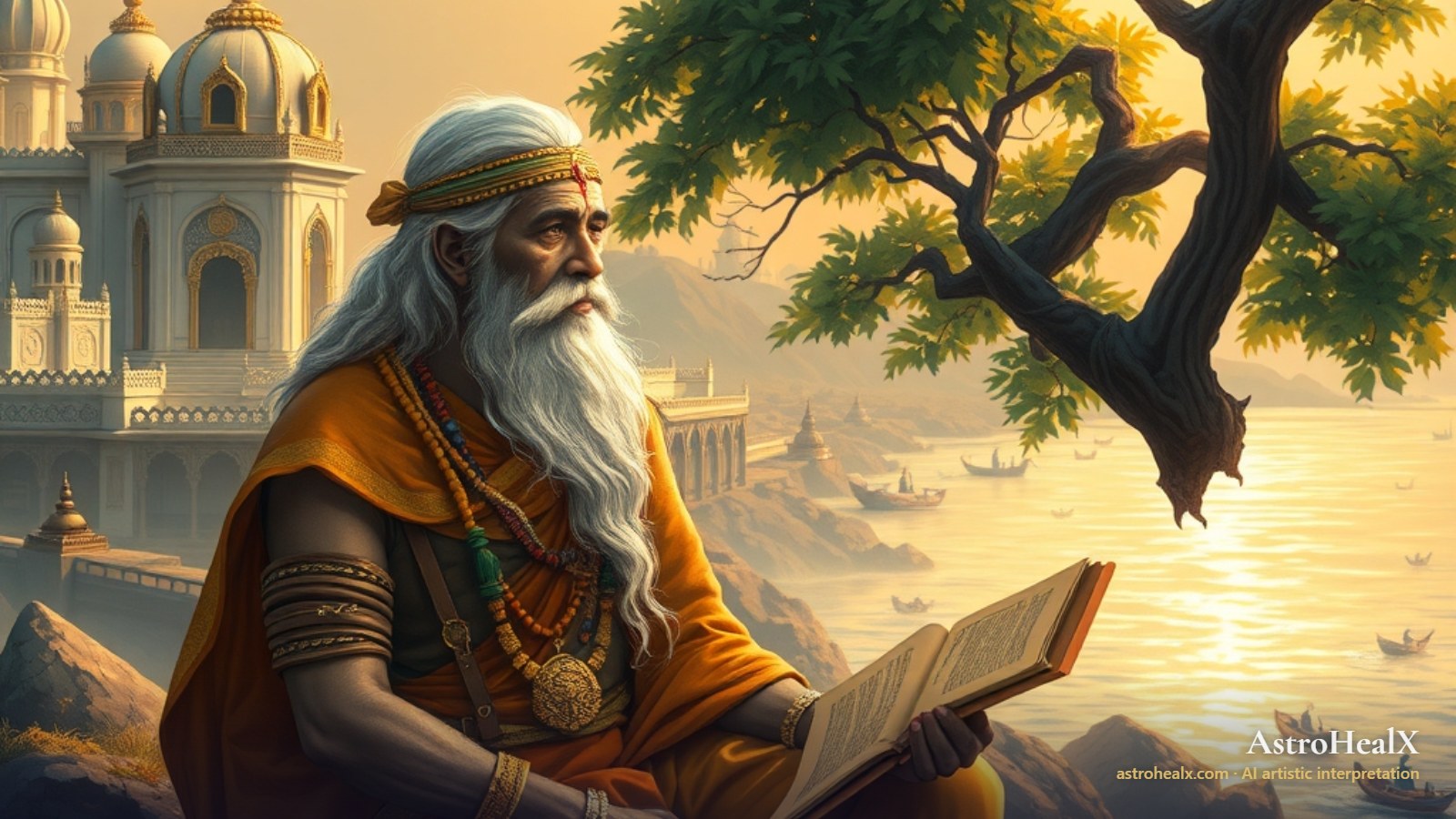
A bandit became a poet, and a bird's cry became the first verse. · 8 min · 5 scenes
Scene 1
On the bank of the Tamasa river the sage Valmiki asks the wandering seer Narada a question that opens the whole epic: is there, anywhere in the world now, a man who is virtuous, brave, truthful, firm in his vows, and kind to every creature? Narada answers with a name — Rama, of the house of Ikshvaku, king of Ayodhya — and tells his story in brief.
Scene 2
Walking to bathe, Valmiki watches a pair of krauncha birds in love. A hunter's arrow kills the male; the female circles, crying. Grief rises in the sage and leaves his mouth as something he has never spoken before — four lines of equal measure, a curse on the hunter that is also music. "Shoka" has become "shloka": sorrow has become verse.
Scene 3
Brahma, the creator, appears at the hermitage. The metre you have found, he says, is for Rama. Compose his life — all of it, the known and the hidden — and as long as mountains stand and rivers flow, the tale will be told. Valmiki sits in meditation and sees the whole story "as clearly as a fruit in the palm of the hand".
Scene 4
Two boys of the hermitage, Kusha and Lava, learn the twenty-four thousand verses by heart and sing them, with lute and drum, from town to town — and at last in the court of a king who does not yet know that the singers are his own sons. This is how the Ramayana enters the world: sung by children to the man it is about.
Scene 5
Over the centuries the story was told again in every Indian language: Kamban in Tamil (12th c.), Krittibas in Bengali, Tulsidas in Awadhi (1574), and in Thailand, Cambodia, Java and Bali under other names. The spine stays the same; the colours change. On this journey we follow Valmiki, and pause where the others see things differently.
What happened
Valmiki asks who the ideal man is, discovers the shloka metre through grief, and composes Rama's story, which his pupils Kusha and Lava sing.
Why it matters
The epic tells you at the start what it is for: a portrait of how a human being can live well, and a claim that poetry is born from compassion.
What happens next
A childless king performs a great sacrifice, and four sons are born in Ayodhya.
Why would the poet choose to open with a question rather than with a hero?
हिंदी में — रामायण की कथा
तमसा नदी के तट पर ऋषि वाल्मीकि परिव्राजक नारद से वह प्रश्न पूछते हैं जिससे पूरा महाकाव्य खुलता है: क्या इस समय संसार में कोई ऐसा पुरुष है जो गुणवान, वीर, सत्यवादी, दृढ़व्रत और सब प्राणियों पर दयालु हो? नारद एक नाम लेते हैं — इक्ष्वाकु-वंश के राम, अयोध्या के राजा — और संक्षेप में उनकी कथा सुनाते हैं।
स्नान को जाते वाल्मीकि प्रेम में मग्न क्रौंच-युगल को देखते हैं। व्याध का बाण नर को मार देता है; मादा रोती हुई चक्कर काटती है। ऋषि में शोक उमड़ता है और मुख से कुछ ऐसा निकलता है जो पहले कभी नहीं कहा — समान मात्रा की चार पंक्तियाँ, व्याध को शाप जो संगीत भी है। "शोक" "श्लोक" बन गया है।
वाल्मीकि पूछते हैं आदर्श पुरुष कौन है, शोक से श्लोक-छंद पाते हैं, और राम की कथा रचते हैं जिसे शिष्य कुश-लव गाते हैं।
Sources: Valmiki Ramayana, Bala Kanda, sargas 1–4. Modern retelling, not translation; "variant" marks regional or later additions. Images are AI artistic interpretations.
Episode 2: Birth of Lord Rama ›
This page is the readable version. The interactive view has the full reader, search and related tools.
Open in AstroHealX