Satyanarayan Puja & Katha · सत्यनारायण पूजा और कथा
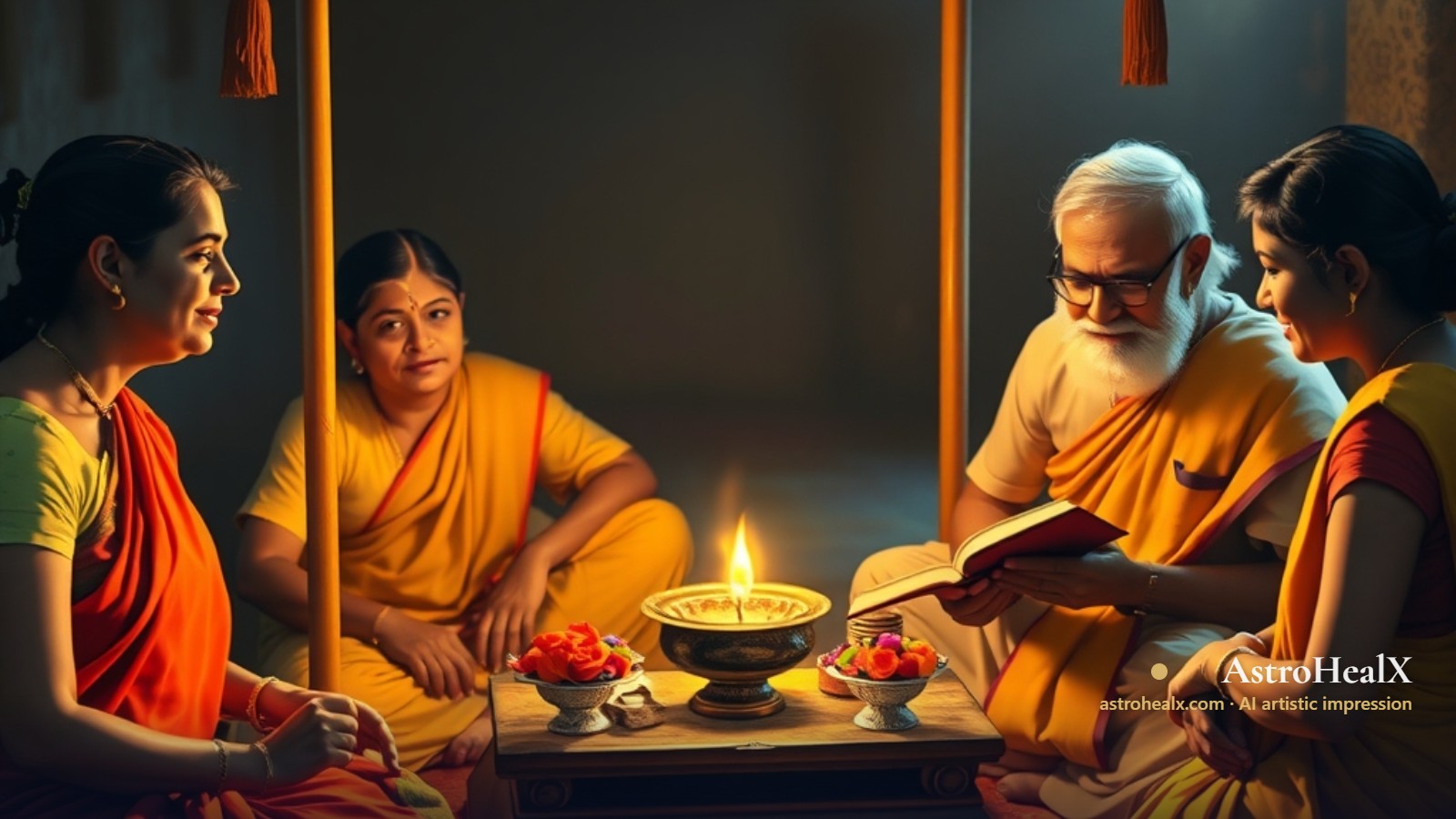
The most common thanksgiving puja in Indian homes — on a full moon, after a wedding, a new house, a recovery or any wish fulfilled — with the five-chapter katha everyone has heard.
| When | Any Purnima (full moon), especially Kartik, Vaishakh, Shravan and Chaitra; also Ekadashi, Sankranti, or any auspicious day chosen for a family occasion; evening (pradosh) or morning. |
|---|---|
| Deity | Vishnu as Satyanarayan — "the Lord who is Truth" |
| Where | All of India; especially Maharashtra, Gujarat, Bengal, Bihar, UP, Andhra–Telangana, Karnataka |
Origin and scripture
The katha is from the Skanda Purana, Reva Khanda, told by Suta to the sages of Naimisharanya: Narada asks Vishnu for a way out of suffering for the people of Kali Yuga, and Vishnu teaches the vrat. Its five chapters follow a poor brahmin, a woodcutter, the merchant Sadhu and his son-in-law, the merchant's wife Lilavati and daughter Kalavati, and King Tungadhvaja — each prospers by the vrat and suffers by neglecting or mocking it. The lesson is not fear but satya: keeping one's word to God and to people.
The vidhi, step by step
- Preparation — Clean the puja place; spread a yellow or red cloth on a chowki (low table); draw an ashtadal (eight-petal) rangoli with rice flour; place a kalash on rice, with mango leaves and a coconut, and the image or shaligram of Satyanarayan (or of Vishnu/Krishna) beside it. Prepare the prasad — sheera/panjiri: equal parts (traditionally 1¼ measures, sava) of wheat flour (or semolina), sugar, ghee, with banana, milk and cardamom — plus panchamrit, fruits and betel leaves. Everyone bathes and wears clean clothes.
- Sankalp, Ganesh and Navagraha — Light the lamp. Take the sankalp (date, place, name-gotra, purpose). Worship Ganesh first (a betel-nut on rice stands for him), then the Navagraha, the family deity and the kalash (Varuna), with the five offerings each.
- Satyanarayan puja — sixteen offerings — Invoke Satyanarayan, bathe the image with water and panchamrit, dress it with cloth and sacred thread, offer sandal, flowers, tulsi (essential for Vishnu), incense, lamp, naivedya (the sheera, fruit, panchamrit), betel and dakshina, chanting "Om Namo Bhagavate Vasudevaya" or the Vishnu Sahasranama if there is time.
- The katha — five chapters — The host or a priest reads the five chapters aloud; after each, everyone says "Shri Satyanarayan Bhagwan ki jai" and a flower is offered. Listening to the whole katha is the heart of the vrat — leaving midway is the one thing the katha itself warns against.
- Aarti and prasad — Sing the aarti ("Jai Lakshmi Ramana" is traditional), offer camphor, circumambulate, then distribute panchamrit and sheera to all — no one who attends leaves without prasad. The vrati eats only after everyone else, breaking the day's fast.
Samagri
- Image/idol of Satyanarayan or shaligram; chowki, yellow cloth
- Kalash, mango leaves, coconut, rice, betel nuts (for Ganesh, Navagraha)
- Panchamrit: milk, curd, ghee, honey, sugar; tulsi leaves (many)
- Sheera/panjiri ingredients (sava measure each), bananas, seasonal fruit
- Flowers, garland, sandal, kumkum, haldi, akshat, sacred thread, cloth
- Lamp, ghee, camphor, incense, conch and bell
- Satyanarayan katha book; dakshina
Mantras
Mula mantra
ॐ नमो भगवते वासुदेवाय
oṃ namo bhagavate vāsudevāya
Om, salutations to the Lord Vasudeva. (Bhagavata tradition)
Dhyana
शान्ताकारं भुजगशयनं पद्मनाभं सुरेशं विश्वाधारं गगनसदृशं मेघवर्णं शुभाङ्गम्। लक्ष्मीकान्तं कमलनयनं योगिभिर्ध्यानगम्यं वन्दे विष्णुं भवभयहरं सर्वलोकैकनाथम्॥
śāntākāraṃ bhujagaśayanaṃ padmanābhaṃ sureśam…
I bow to Vishnu, of peaceful form, resting on the serpent, lotus-navelled, lord of the gods, support of the universe, sky-like, cloud-dark, beloved of Lakshmi, lotus-eyed, reached by yogis in meditation, remover of the fear of becoming, the one lord of all worlds. (Traditional Vishnu dhyana shloka)
Do
- Invite neighbours — the katha is meant to be heard by many
- Keep tulsi in every offering to Vishnu
- Finish all five chapters before anyone eats
Don't
- Do not leave the katha midway or refuse prasad (the katha's own warning)
- No onion/garlic in the prasad; no tasting before offering
Questions people ask
Do we need a priest?
No. The katha is written to be read by the householder; a priest adds the Sanskrit sankalp and the full shodashopachara, which you can also do in your own words.
हिंदी में — सत्यनारायण पूजा और कथा
भारतीय घरों की सबसे सामान्य कृतज्ञता-पूजा — पूर्णिमा पर, विवाह, नया घर, स्वास्थ्य-लाभ या कोई मनोकामना पूरी होने पर — पाँच अध्यायों की कथा के साथ जो सबने सुनी है।
कथा स्कंद पुराण, रेवा खंड से, नैमिषारण्य के ऋषियों को सूत द्वारा कही: नारद कलियुग के लोगों के दुःख से मुक्ति का उपाय पूछते हैं और विष्णु व्रत बताते हैं। पाँच अध्याय निर्धन ब्राह्मण, लकड़हारे, साधु वणिक और दामाद, पत्नी लीलावती-पुत्री कलावती, और राजा तुंगध्वज की कथा कहते हैं — हर एक व्रत से समृद्ध और उसकी उपेक्षा या उपहास से दुःखी। शिक्षा भय नहीं, सत्य है: ईश्वर और मनुष्यों को दिया वचन निभाना।
तैयारी — पूजा-स्थल स्वच्छ करें; चौकी पर पीला या लाल वस्त्र; चावल के आटे से अष्टदल; अक्षत पर कलश, आम के पत्ते और नारियल, पास में सत्यनारायण (या विष्णु/कृष्ण) का चित्र या शालिग्राम। प्रसाद बनाएँ — सीरा/पंजीरी: सवा-सवा मात्रा आटा (या सूजी), चीनी, घी, साथ केला, दूध, इलायची — और पंचामृत, फल, पान। सब स्नान कर स्वच्छ वस्त्र पहनें।
संकल्प, गणेश और नवग्रह — दीप जलाएँ। संकल्प लें (तिथि, स्थान, नाम-गोत्र, उद्देश्य)। पहले गणेश (अक्षत पर सुपारी), फिर नवग्रह, कुलदेवता और कलश (वरुण) — हर एक को पाँच उपचार।
Sources: Skanda Purana, Reva Khanda (Satyanarayan Vrat Katha, 5 adhyayas). Family and regional custom take precedence.
This page is the readable version. The interactive view has the full reader, search and related tools.
Open in AstroHealX