How a Hindu puja works — the basics
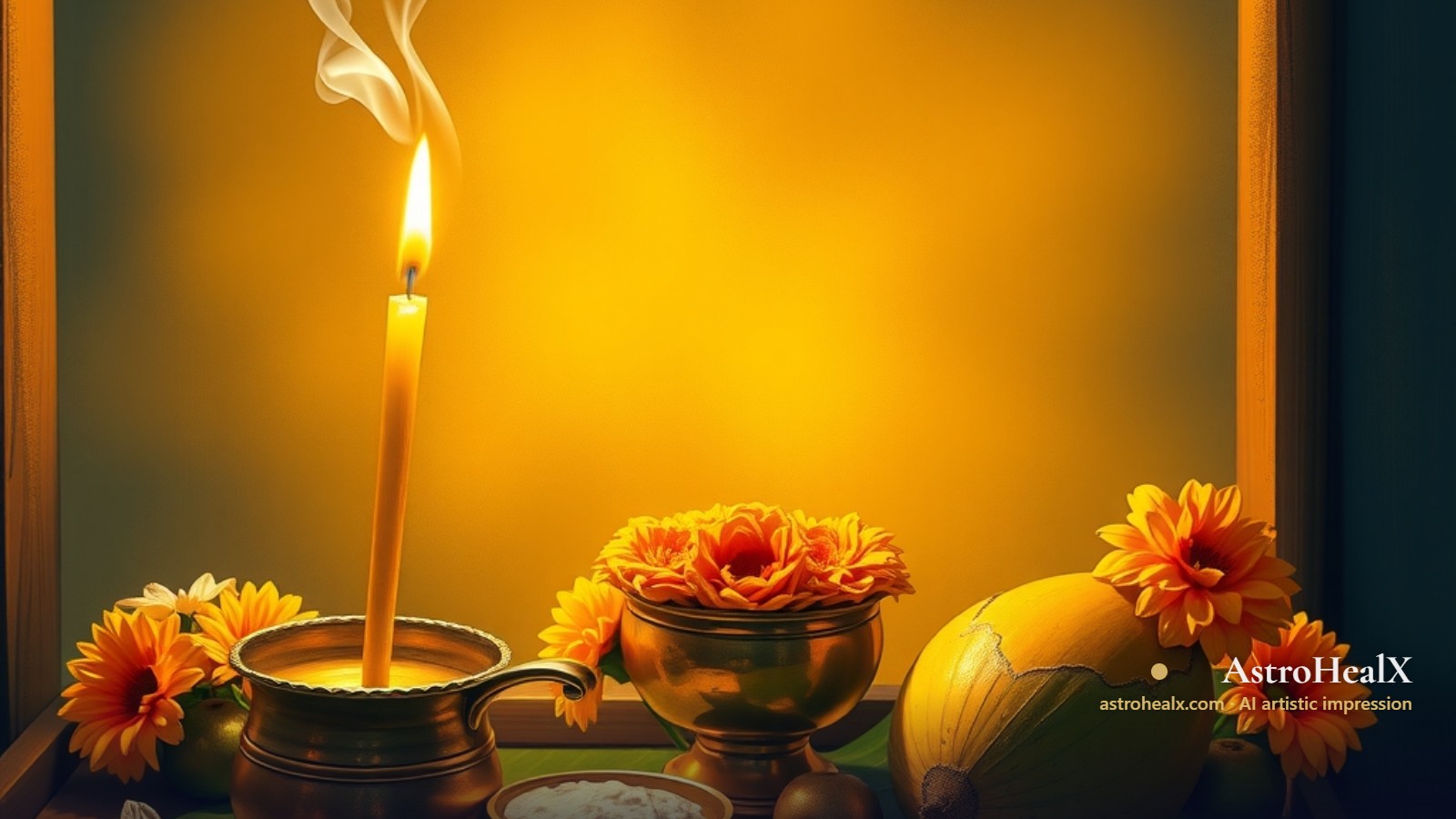
A puja is hospitality offered to the divine as to an honoured guest: you invite, seat, bathe, dress, feed, light a lamp for, and finally take leave of the deity. The classical form has sixteen offerings (shodashopachara); the everyday home form has five (panchopachara). Every puja on this page is a variation of this one structure, so once you know it, no vidhi feels foreign.
The sixteen offerings
- Avahana — Invocation — inviting the deity to be present
- Asana — Offering a seat
- Padya — Water for the feet
- Arghya — Water offered in the cupped hands
- Achamana — Water to sip
- Snana — Bath — water, then panchamrit (milk, curd, ghee, honey, sugar)
- Vastra — Clothing — a cloth or sacred thread
- Yajnopavita — Sacred thread (for male deities)
- Gandha — Sandal paste / fragrance
- Pushpa — Flowers
- Dhupa — Incense
- Dipa — Lamp
- Naivedya — Food offering
- Tambula — Betel leaf and nut
- Pradakshina & Namaskara — Circumambulation and prostration
- Visarjana — Taking leave — asking the deity to return to their abode
Sankalp
Sankalp is the spoken intention that opens every vrat or puja: holding water, rice and a flower in the right palm, you name the date (tithi, month, year), the place, yourself (name and gotra) and the purpose, then release the water. It converts a ritual into a vow. If you do not know the Sanskrit formula, say it clearly in your own language — the tradition is explicit that intention matters more than the words.
Kalash
The kalash — a copper or clay pot filled with water, topped with mango leaves and a coconut, set on rice or grain — stands for the cosmos and for the deity invited into the water. It is established (sthapana) at the start of Navratri, Satyanarayan, griha-pravesh and most larger pujas, and the water is sprinkled on the household at the end.
Aarti
Aarti closes the offering: a lamp (usually five wicks, or camphor) is circled clockwise before the deity — traditionally four times at the feet, twice at the navel, once at the face, seven times over the whole form — while the household sings. Afterwards everyone passes their hands over the flame and touches their eyes, receiving the light.
Direction and seat
Face east (or north) while performing puja; the deity faces west or south towards you. Sit on an asana (mat), not bare floor. Keep the lamp to the right of the deity and incense to the left, flowers and prasad in front. Use the right hand for offerings; the left supports the right at the wrist.
हिंदी में
पूजा दिव्य को सम्मानित अतिथि की तरह दिया गया आतिथ्य है: आप आमंत्रित करते हैं, आसन देते हैं, स्नान कराते हैं, वस्त्र पहनाते हैं, भोग लगाते हैं, दीप दिखाते हैं और अंत में विदा लेते हैं। शास्त्रीय रूप में सोलह उपचार हैं (षोडशोपचार); घर के दैनिक रूप में पाँच (पंचोपचार)। इस पृष्ठ की हर पूजा इसी एक ढाँचे का रूप है।
This page is the readable version. The interactive view has the full reader, search and related tools.
Open in AstroHealX