Maha Shivratri — the night vigil · महाशिवरात्रि — रात्रि जागरण
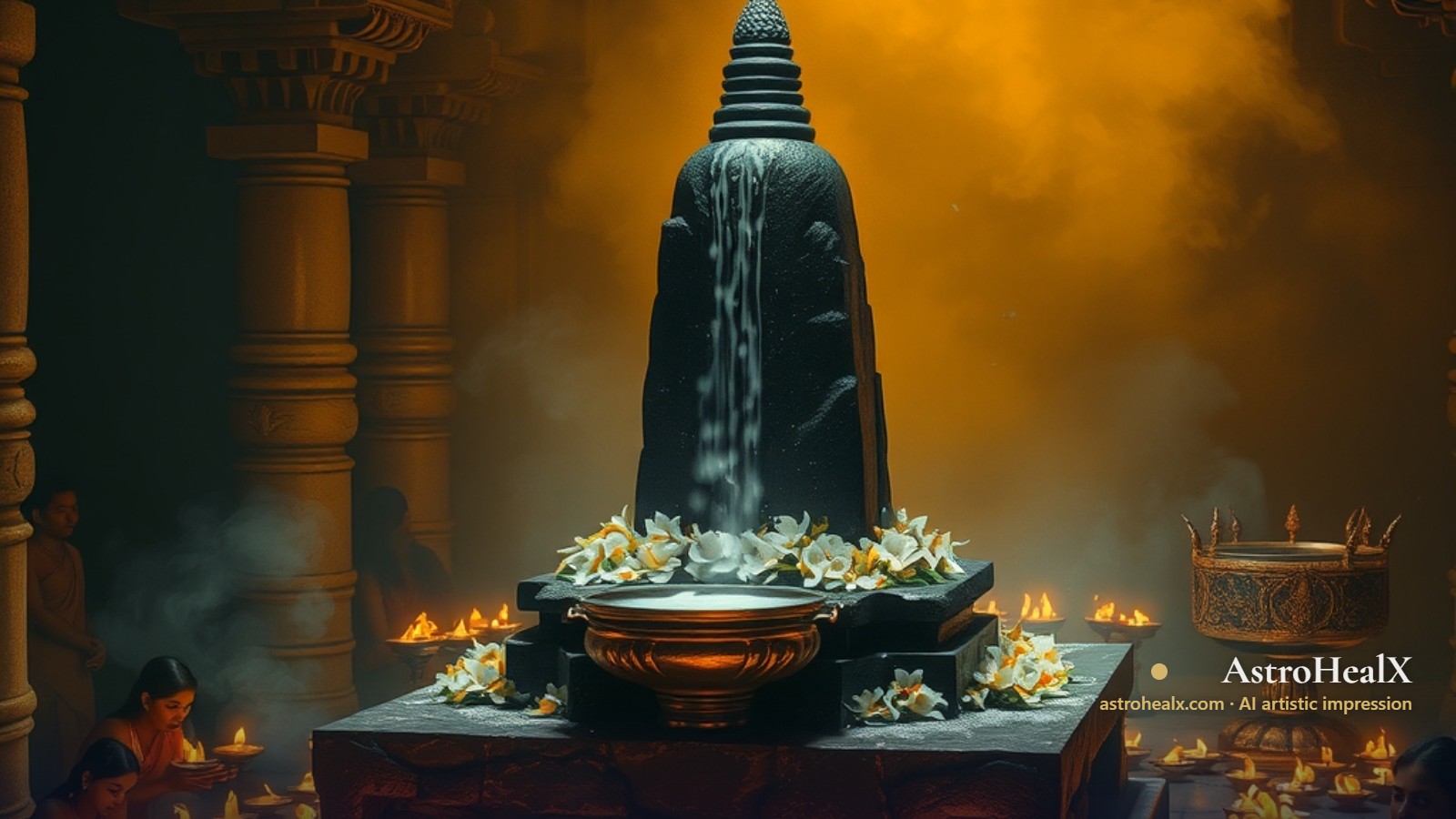
The one night a year when the lingam is bathed through all four watches with milk, curd, honey, ghee and sugar, bel leaves are heaped on it, and no one sleeps.
| When | Phalguna Krishna Chaturdashi (Magha, by the purnimanta reckoning) — the night before the new moon. 2026: Sunday 15 February, with the four prahars from about 6 pm to 6 am. The monthly Masik Shivratri falls on every Krishna Chaturdashi. |
|---|---|
| Deity | Shiva as the lingam; Shiva–Parvati |
| Where | All India and Nepal (Pashupatinath); the twelve Jyotirlingas; Varanasi, Ujjain, Srisailam, Chidambaram, Thiruvannamalai |
Origin and scripture
The Shiva Purana gives several: this night Shiva appeared as the endless pillar of light (the jyotirlinga) before Brahma and Vishnu; this night Shiva and Parvati were married; this night Shiva drank the halahala poison and the gods kept him awake. The Garuda and Skanda Puranas tell of the hunter who unknowingly dropped bel leaves on a lingam all night and was saved — the model of the vigil that works even without knowledge.
The vidhi, step by step
- The day — Fast (fruit, milk, or nirjala by capacity) after a morning bath with a sankalp for the night vigil. Visit a Shiva temple; at home set a lingam (parthiva — made of clay that day — is specially praised) on a copper or brass plate facing north.
- Four prahars — the abhishek — In each of the four watches of the night the lingam is bathed and dressed again: Prahar 1 — milk abhishek; 2 — curd; 3 — ghee; 4 — honey (and sugar / sugarcane juice), each followed by water, Ganga water if possible, with "Om Namah Shivaya" or the Rudrashtadhyayi / Mahamrityunjaya. After each bath: bel leaves (three-leaved, stalk toward you, uncut), white flowers, dhatura, bhang, ash (vibhuti) in three lines, sandal, rice, fruit, a lamp and incense.
- The vigil — Between the prahars: Shiva stories, the Shiva Tandava stotra, Lingashtakam, bhajans; temples hold the Rudrabhishek and the marriage procession. Sleep is avoided — the texts count the vigil itself as the vrat.
- Parana — After sunrise, before the Chaturdashi tithi ends (check the panchang), bathe, offer a final puja and break the fast with the prasad; the clay lingam is immersed in water or placed under a tree.
Samagri
- Lingam (or clay to make one), copper plate, water pot with a steady drip (dhara)
- Milk, curd, ghee, honey, sugar; Ganga water; rose water
- Bel leaves (many), white flowers, dhatura, aak (madar), bhang, lotus
- Vibhuti, sandal, akshat, white cloth, sacred thread, rudraksha
- Fruits (ber, banana), kheer, thandai; lamp, camphor, incense, bell
- Rudrashtadhyayi/Mahamrityunjaya text for the chanting
Mantras
Panchakshari
ॐ नमः शिवाय
oṃ namaḥ śivāya
Om, salutation to Shiva — the five syllables that are the whole puja. (Yajurveda, Shri Rudram (Taittiriya Samhita 4.5.8))
Mahamrityunjaya
ॐ त्र्यम्बकं यजामहे सुगन्धिं पुष्टिवर्धनम्। उर्वारुकमिव बन्धनान्मृत्योर्मुक्षीय मामृतात्॥
oṃ tryambakaṃ yajāmahe sugandhiṃ puṣṭivardhanam | urvārukamiva bandhanān mṛtyor mukṣīya māmṛtāt ||
We worship the three-eyed one, fragrant, who nourishes all; as the cucumber is freed from its stem, may we be freed from death — not from immortality. (Rigveda 7.59.12; Yajurveda 3.60)
Bel-leaf offering
त्रिदलं त्रिगुणाकारं त्रिनेत्रं च त्रयायुधम्। त्रिजन्मपापसंहारं एकबिल्वं शिवार्पणम्॥
tridalaṃ triguṇākāraṃ trinetraṃ ca trayāyudham | trijanmapāpasaṃhāraṃ ekabilvaṃ śivārpaṇam ||
Three-leaved, formed of the three gunas, three-eyed, three-weaponed, destroying the sins of three births — one bel leaf I offer to Shiva. (Bilvashtakam (traditional))
Do
- Offer bel with the smooth side down, stalk toward you; a torn leaf is fine if nothing else is available (the hunter's story)
- Pour abhishek slowly, in a stream, facing north; let the water drain, never pool
- Keep the four prahar times from a panchang for your city
Don't
- No tulsi, kewda/ketaki flower, turmeric, kumkum or coconut water on the lingam (traditional prohibitions)
- Do not circumambulate fully — the somasutra (drain) is not crossed; go half-way and return
- Do not offer the lingam food cooked with onion/garlic; the vrati avoids grain
हिंदी में — महाशिवरात्रि — रात्रि जागरण
वर्ष की वह एक रात जब लिंग को चारों प्रहर दूध, दही, शहद, घी, शक्कर से स्नान, बेलपत्र का ढेर, और कोई नहीं सोता।
शिव पुराण अनेक कारण देता है: इस रात शिव ब्रह्मा-विष्णु के सामने अनंत ज्योति-स्तंभ (ज्योतिर्लिंग) रूप में प्रकट हुए; इस रात शिव-पार्वती विवाह; इस रात शिव ने हलाहल पिया और देवता उन्हें जगाए रखे। गरुड़ और स्कंद पुराण उस व्याध की कथा कहते हैं जिसने अनजाने रातभर लिंग पर बेलपत्र गिराए और तर गया — बिना ज्ञान भी फलदायी जागरण का आदर्श।
दिन — प्रातः स्नान और रात्रि-जागरण के संकल्प के साथ उपवास (फल, दूध, या सामर्थ्य से निर्जला)। शिव मंदिर जाएँ; घर में ताँबे/पीतल की थाली पर उत्तर-मुख लिंग (पार्थिव — उसी दिन मिट्टी का — विशेष प्रशंसित)।
चार प्रहर — अभिषेक — रात के चारों प्रहर में लिंग का पुनः स्नान-शृंगार: प्रहर 1 — दूध; 2 — दही; 3 — घी; 4 — शहद (और शक्कर/ईख-रस), हर एक के बाद जल, संभव हो तो गंगाजल, "ॐ नमः शिवाय" या रुद्राष्टाध्यायी/महामृत्युंजय के साथ। हर स्नान के बाद: बेलपत्र (तीन पत्ती, डंठल अपनी ओर, अखंड), श्वेत पुष्प, धतूरा, भांग, तीन रेखा भस्म, चंदन, अक्षत, फल, दीप, धूप।
Sources: Shiva Purana, Vidyeshvara Samhita 5–9; Koti Rudra Samhita 37–40 · Garuda Purana; Skanda Purana (hunter legend) · Yajurveda — Shri Rudram. Family and regional custom take precedence.
This page is the readable version. The interactive view has the full reader, search and related tools.
Open in AstroHealX