Ganesh Chaturthi — Sthapana to Visarjan · गणेश चतुर्थी — स्थापना से विसर्जन
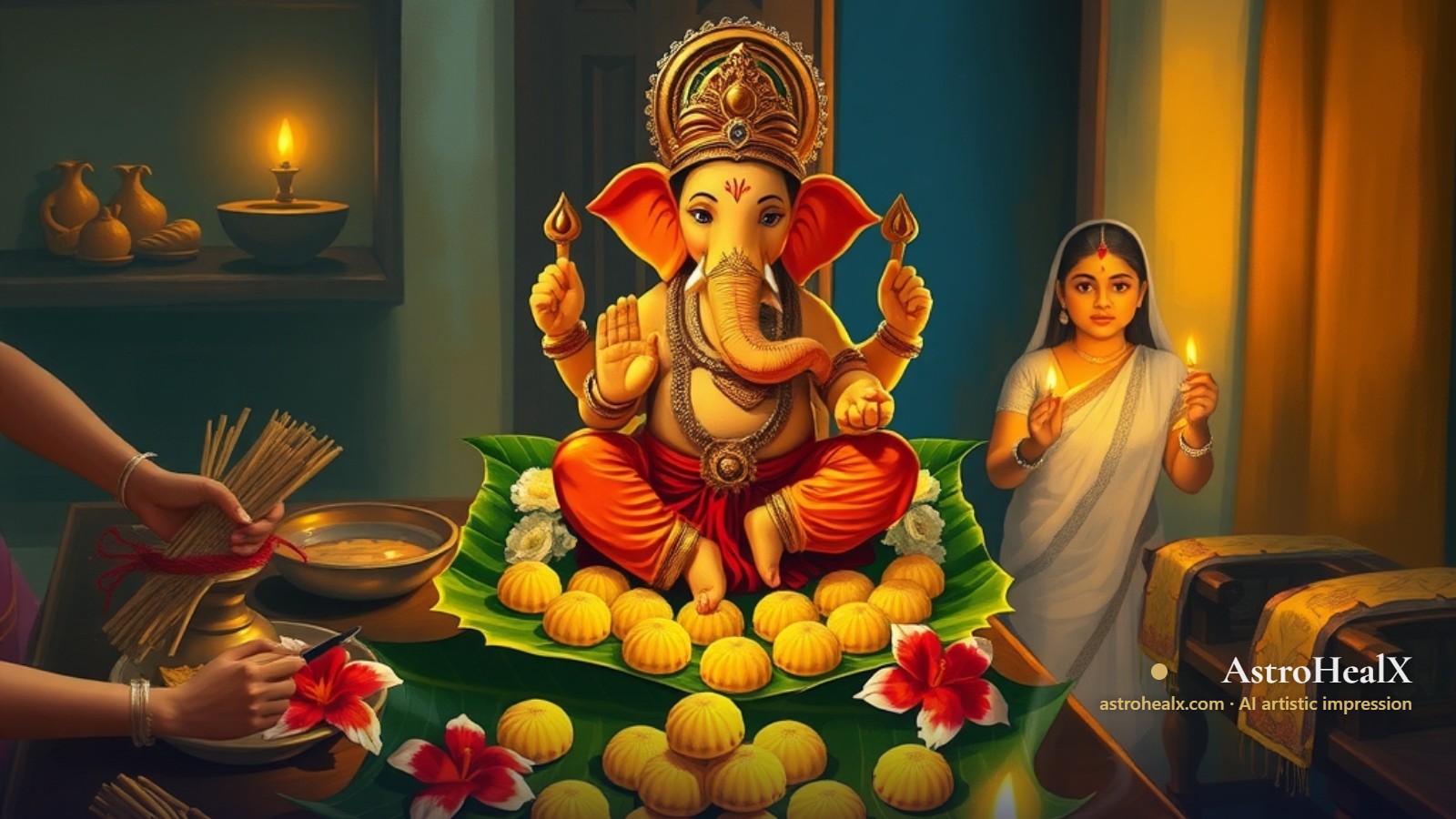
Ten days when Ganapati is a house guest: welcomed with the pranapratishtha, fed modak, and sent off into water with "Ganapati Bappa Morya, pudhchya varshi lavkar ya".
| When | Bhadrapada Shukla Chaturthi, midday puja (madhyahna) — 2026: Monday 14 September; Anant Chaturdashi visarjan 23 September. Households keep him 1½, 3, 5, 7 or 10 days. |
|---|---|
| Deity | Ganesh / Ganapati |
| Where | Maharashtra above all; Goa, Karnataka, Andhra–Telangana (Vinayaka Chavithi), Tamil Nadu, Gujarat, MP; worldwide Marathi diaspora |
Origin and scripture
Ganesh's birth from Parvati's own body and the elephant head are told in the Shiva Purana (Rudra Samhita, Kumara Khanda) and the Ganesha Purana; Chaturthi is his birth tithi. The domestic puja is old (Peshwa-era Pune records it); the public sarvajanik festival was created by Lokmanya Tilak in 1893 as a gathering the colonial government could not ban.
The vidhi, step by step
- Bringing him home — The idol — ideally unbaked clay (shadu mati) that dissolves — is brought covered with a cloth, with music, and the face uncovered only at the altar. A decorated makhar (canopy) is ready, facing east or north, with a rice-filled plate for the idol to stand on.
- Pranapratishtha — After sankalp, life is invoked into the idol — the priest or householder touches the idol's heart, eyes and limbs with durva while chanting the pranapratishtha mantras ("asya prana pratishthantu…"), and from this moment the idol is treated as a living guest who is not left alone and is offered food before the family eats.
- Shodashopachara — Sixteen offerings with the Ganapati Atharvashirsha; special to Ganesh: 21 durva blades in bunches, red flowers (hibiscus), red sandal, 21 modaks (steamed ukdiche modak in Maharashtra, fried elsewhere), and — never — tulsi, except on this one day in some traditions.
- Daily worship — Morning and evening aarti ("Sukhakarta Dukhaharta", composed by Samarth Ramdas), naivedya at each meal, the Atharvashirsha or Sankatanashana stotra, guests, music and the reading of the Ganesh story on the night of the 4th (not looking at the moon — the Syamantaka legend).
- Uttarpuja and visarjan — On the last day the uttarpuja asks him to return next year; rice is sprinkled, the idol is moved slightly (a sign he has left), and carried in procession to water with gulal and "Morya". Immerse clay idols in a river, sea or a home bucket/artificial tank and pour the water on plants; the nirmalya (flowers) goes to compost, never the river.
Samagri
- Clay idol, makhar/canopy, red cloth
- Durva (21 + daily), red hibiscus, marigold, garlands, mango leaves, banana stalks
- Modak (21), laddoo, coconut, bananas, panchakhadya (coconut, jaggery, poppy seed, dates, dry fruit)
- Red sandal, sindoor, kumkum, haldi, akshat, mauli, janeu
- Panchamrit, lamp, camphor, incense, bell, conch
- Gulal for visarjan; a bucket if immersing at home
Mantras
Ganesh dhyana
वक्रतुण्ड महाकाय सूर्यकोटिसमप्रभ। निर्विघ्नं कुरु मे देव सर्वकार्येषु सर्वदा॥
vakratuṇḍa mahākāya sūryakoṭisamaprabha | nirvighnaṃ kuru me deva sarvakāryeṣu sarvadā ||
O curved-trunked, mighty-bodied one, radiant as ten million suns — make all my undertakings free of obstacles, always. (Traditional (Mudgala/Ganesha Purana recension))
Ganapati Atharvashirsha, opening
ॐ नमस्ते गणपतये। त्वमेव प्रत्यक्षं तत्त्वमसि। त्वमेव केवलं कर्तासि…
oṃ namaste gaṇapataye | tvameva pratyakṣaṃ tattvamasi | tvameva kevalaṃ kartāsi…
Om, salutation to Ganapati. You alone are the visible That-thou-art; you alone are the maker… (Ganapati Atharvashirsha (Atharvaveda tradition))
Beej
ॐ गं गणपतये नमः
oṃ gaṃ gaṇapataye namaḥ
Om Gam — salutations to Ganapati. (Traditional)
Do
- Use clay idols and natural colours; immerse at home or in designated tanks
- Keep a lamp burning and someone at home while he is "resident"
- Offer durva and modak daily; feed the poor on visarjan day
Don't
- No plaster-of-Paris idols or chemical paint in water bodies
- No tulsi to Ganesh (except where family custom allows on Chaturthi)
- Do not look at the moon on Chaturthi night (tradition); do not leave the idol in an empty house
हिंदी में — गणेश चतुर्थी — स्थापना से विसर्जन
दस दिन जब गणपति घर के अतिथि हैं: प्राणप्रतिष्ठा से स्वागत, मोदक का भोग, और "गणपति बप्पा मोरया, पुढच्या वर्षी लवकर या" के साथ जल में विदा।
पार्वती के शरीर से गणेश का जन्म और गज-मुख शिव पुराण (रुद्र संहिता, कुमार खंड) और गणेश पुराण में; चतुर्थी उनकी जन्म-तिथि। घरेलू पूजा प्राचीन है (पेशवा-कालीन पुणे में अंकित); सार्वजनिक उत्सव लोकमान्य तिलक ने 1893 में ऐसे समागम के रूप में आरंभ किया जिसे औपनिवेशिक सरकार रोक न सके।
घर लाना — मूर्ति — आदर्शतः शाडू मिट्टी की जो घुल जाए — कपड़े से ढँककर, वाद्य के साथ लाई जाती है, मुख वेदी पर ही खोला जाता है। सजा मखर पूर्व या उत्तर मुख तैयार, मूर्ति के लिए अक्षत भरी थाली।
प्राणप्रतिष्ठा — संकल्प के बाद मूर्ति में प्राण का आवाहन — पुरोहित या गृहस्थ दूर्वा से मूर्ति के हृदय, नेत्र, अंगों का स्पर्श कर प्राणप्रतिष्ठा मंत्र ("अस्य प्राणाः प्रतिष्ठन्तु…") कहता है, और इस क्षण से मूर्ति जीवित अतिथि है जिसे अकेला नहीं छोड़ा जाता और परिवार से पहले भोग।
Sources: Shiva Purana, Rudra Samhita, Kumara Khanda 13–18 · Ganesha Purana; Mudgala Purana · Ganapati Atharvashirsha. Family and regional custom take precedence.
This page is the readable version. The interactive view has the full reader, search and related tools.
Open in AstroHealX