Rama · राम
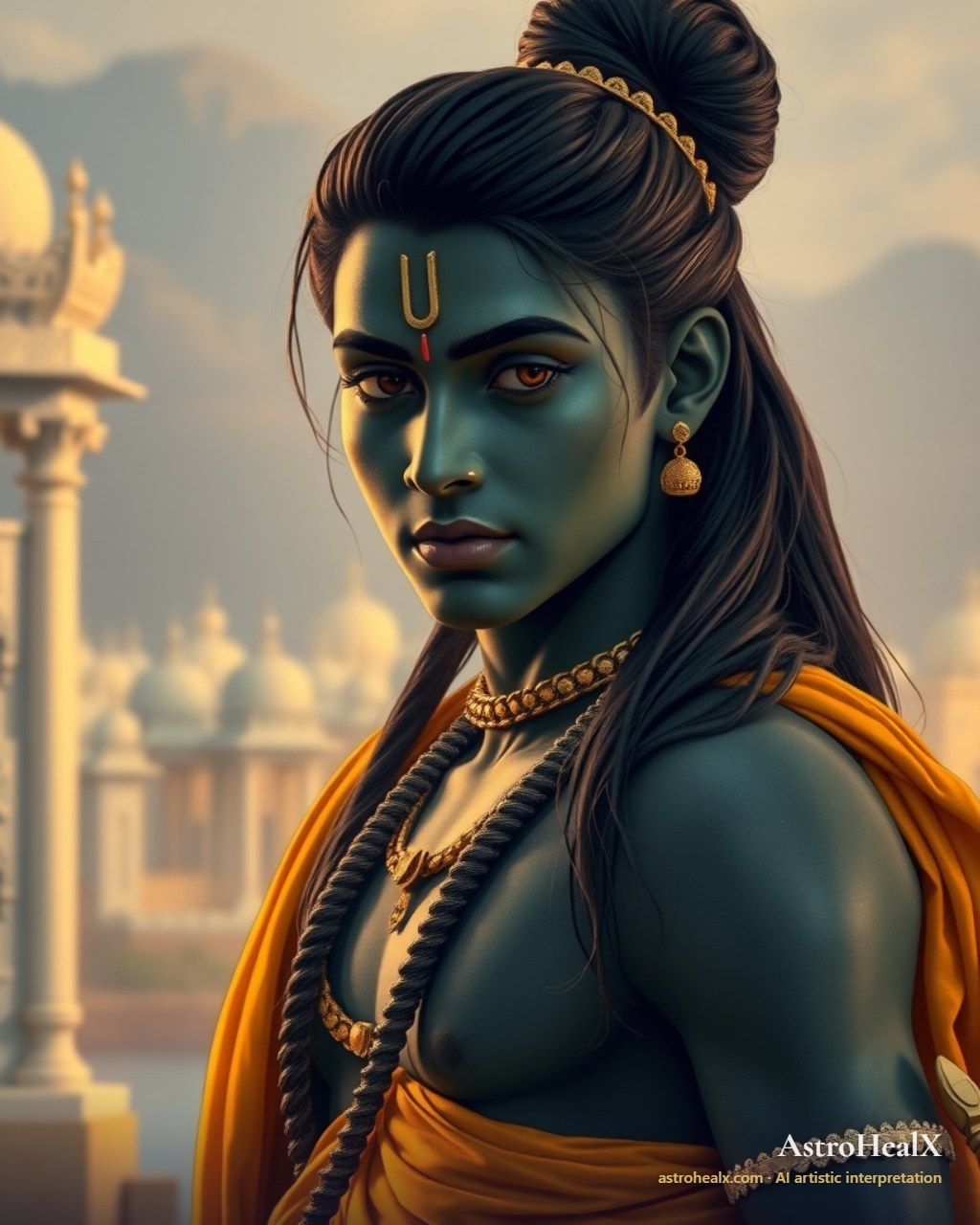
Prince of Ayodhya, the ideal man
Family and lineage
Son of Dasharatha and Kausalya; husband of Sita; brother of Lakshmana, Bharata and Shatrughna; father of Kusha and Lava.
Birth
Born in Ayodhya on the ninth day of Chaitra after Dasharatha's putrakameshti sacrifice; in Valmiki he is a portion of Vishnu, who agreed to be born as a man to kill Ravana.
Role in the epic
Educated by Vasishtha and Vishwamitra; wins Sita by lifting Shiva's bow; accepts fourteen years of exile to honour his father's word; loses Sita to Ravana; allies with the monkeys, builds the bridge and kills Ravana; doubts Sita publicly and accepts her after the fire; rules as the ideal king; in the Uttara Kanda sends Sita away for the people's opinion and loses her to the Earth.
Major decisions and their consequences
Choosing exile over rebellion (ep 7); killing Vali from concealment (ep 13); the fire-ordeal (ep 18); the second banishment (ep 21). Each is defended in the text and each has been questioned ever since.
Words remembered
If my father had asked me to leap into fire, I would have done it.
I will not refuse anyone who comes to me as a friend, even if he has faults — this is the dharma of good men.
How traditions differ
Valmiki shows a man who learns he is God only after the war; Tulsidas's Ramcharitmanas shows God who knows it throughout and acts out a lila; Kamban gives him more inner conflict over Vali; Jain Ramayanas make him a non-violent figure who never kills Ravana (Lakshmana does); Buddhist Dasaratha Jataka has no Ravana at all.
हिंदी में
वसिष्ठ-विश्वामित्र से शिक्षा; शिव-धनुष उठाकर सीता को वरते हैं; पिता के वचन के लिए चौदह वर्ष वनवास; रावण द्वारा सीता-हरण; वानरों से मैत्री, सेतु, रावण-वध; सार्वजनिक संदेह और अग्नि के बाद सीता की स्वीकृति; आदर्श राजा; उत्तरकाण्ड में प्रजा की राय पर सीता को भेजते और पृथ्वी को खो देते हैं।
This page is the readable version. The interactive view has the full reader, search and related tools.
Open in AstroHealX